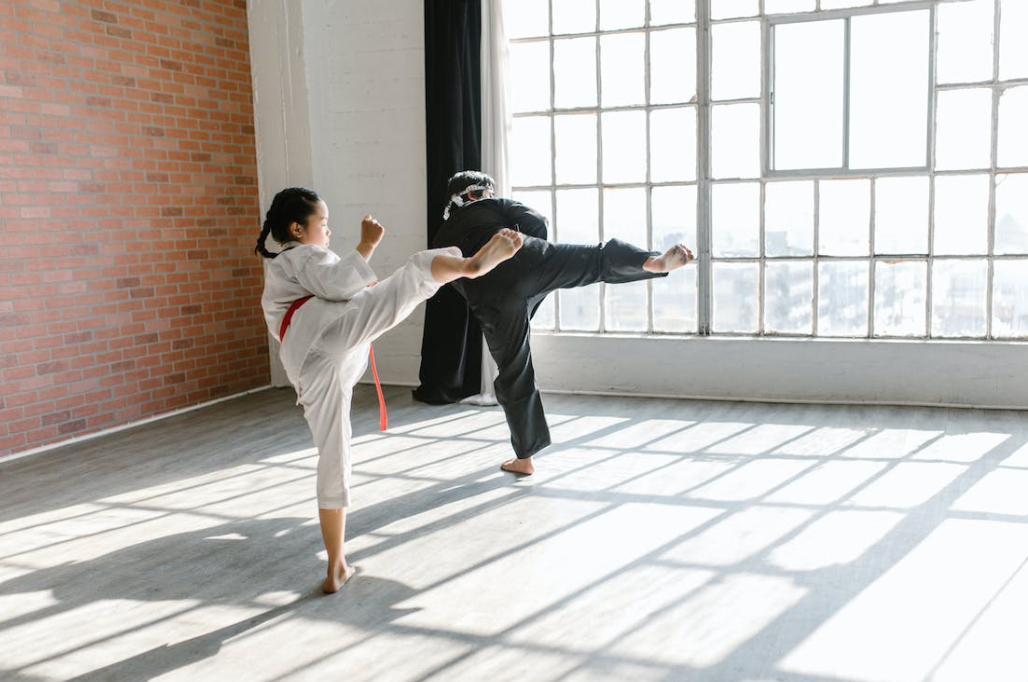
Taekwondo, a martial art known for its lightning-fast kicks and powerful strikes, has a history as captivating as its techniques. Originating in Korea, taekwondo has evolved over centuries, blending traditional Korean martial arts with influences from various sources. In this article, we embark on a journey through time to explore the fascinating history of taekwondo, from its ancient roots to its status as a globally recognized sport.
Ancient Origins and Foundation
The roots of taekwondo can be traced back to Korea’s ancient martial arts traditions, which were shaped by three kingdoms: Goguryeo, Silla, and Baekje. These ancient arts laid the foundation for the future development of taekwondo. Among the earliest recorded martial arts were Subak and Taekkyon, which focused on striking and kicking techniques.
Japanese Colonial Era and the Influence of Karate
The early 20th century brought significant changes to Korea, with its occupation by Japan. During this time, the Japanese introduced various martial arts to Korea, including karate. Korean martial artists incorporated elements of karate into their practice, further enriching the existing techniques and forms. This period became an essential transitional phase in the evolution of taekwondo.
Birth of Taekwondo and Modernization
After the end of the Japanese occupation in 1945, Korean martial arts underwent a transformation. Martial artists sought to unify the diverse Korean styles into a single discipline. In 1955, a group of leading masters came together and founded the Korea Taekwondo Association, which marked the birth of taekwondo as an independent martial art. General Choi Hong Hi played a crucial role in the development of taekwondo by creating the International Taekwon-Do Federation (ITF) in 1966.
Olympic Recognition and Global Expansion
Taekwondo gained international recognition when it was included as a demonstration sport in the 1988 Seoul Olympics. Its remarkable display captivated audiences worldwide. Four years later, at the Barcelona Olympics in 1992, taekwondo was officially recognized as a full medal sport. Since then, it has become an integral part of the Olympic Games, showcasing its elegance and power to a global audience. The World Taekwondo Federation (WTF) was established in 1973 to govern the sport.
Development of Styles and Techniques
Over time, taekwondo practitioners developed various styles and approaches. The ITF and WTF, with their distinct rules and forms, became the two main governing bodies, each emphasizing different aspects of taekwondo. ITF practitioners focus on self-defense techniques and perform patterns called tul, while WTF practitioners prioritize sparring and showcase elaborate kicks and acrobatics. However, both styles share the same core principles of discipline, respect, and self-improvement.
Taekwondo as a Way of Life
Beyond its physical aspects, taekwondo encompasses a philosophy that extends to daily life. It promotes the cultivation of self-discipline, perseverance, and respect for oneself and others. Taekwondo practitioners strive for a harmonious balance between mind, body, and spirit, seeking personal growth and contributing positively to their communities.
The history of taekwondo is a testament to the perseverance and adaptability of the Korean people. From its ancient roots to its global recognition today, taekwondo has evolved into a martial art that embodies grace, power, and discipline. As it continues to spread its influence worldwide, taekwondo serves as a source of inspiration and a reminder of the rich heritage and traditions from which it emerged.